Illnesses Covered by EEOICPA
Which Illnesses Qualify?
The Energy Employees Occupational Illness Compensation Program Act (EEOICPA) was created to compensate workers who have become ill as a result of being exposed to radioactive materials during their employment with the Department of Energy (DOE). However, only certain illnesses which have been linked to radiation, heavy metal, and chemical exposure are covered under the federal program. Under the EEOICPA, certain types of workers can be compensated for occupational illnesses resulting from exposure to dangerous materials while on the job. Occupational illness is defined those that are caused by beryllium illness, specified cancers engendered by radiation exposure, and Chronic silicosis.

Beryllium Illnesses
- Beryllium sensitivity, as established by an abnormal beryllium lymphocyte proliferation test performed on blood or lung cells;
- Established chronic beryllium disease; or
- Any injury, impairment, disability, or illness sustained as a result of exposure.
- Characteristic chest radiographic abnormalities;
- Restrictive or obstructive lung physiology testing;
- Lung pathology consistent with the disease;
- Clinical course consistent with the disorder; and
- Immunologic tests, such as a skin patch or blood test indicating the existence of beryllium sensitivity.
Chronic Silicosis
Covered Cancers
- Multiple myeloma
- Lymphomas
- Thyroid, as long as exposure occurred before the age of 20 years old
- Breast, if the initial exposure occurred before the patient turned 30 years old
- Ovarian
- Skin
- Esophagus, if the claimant was not a heavy smoker and did not partake of a significant amount of alcohol
- Stomach, as long as exposure occurred before the age of 20 years old
- Pharynx, if the claimant was not a heavy smoker
- Salivary gland
- Small intestine
- Pancreas, provided the claimant was not a heavy smoker and did not consume an excessive amount of coffee
- Bile ducts
- Gall bladder
- Urinary tract
- Colon or rectal; or
- Liver, unless diagnosed with cirrhosis or hepatitis B.

Do illnesses covered by Part B differ from Part E?
Yes, there is a difference in the illnesses covered by Part B and Part E. Part B has a specific list of illnesses and cancers (see above). Part E has a more comprehensive approach, covering any diagnosed illness that can be linked to toxic exposure at a DOE facility.
If you suffer from an illness or cancer not listed above, you still may be eligible for EEOICPA compensation. Illnesses covered under EEOICPA Part E include all of the above as well as any illness linked to toxic exposure at a DOE facility. Learn more about the differences between Part B and Part E.
Contact a Healthcare Professional
There are a number of diseases that have been conclusively linked to exposure to certain types of radiation. Recognizing the emotional, physical, and financial toll these diseases can take, the federal government allows eligible claimants to recover compensation for their losses as well as full medical benefits.
Who We Serve
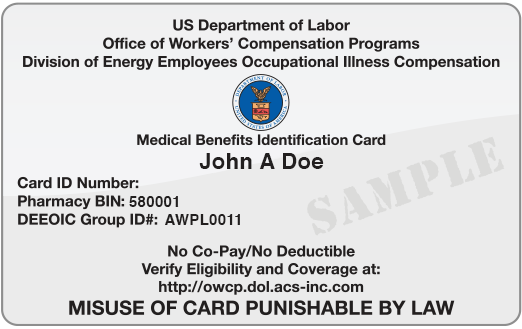
Do you have this card? If you already have this card, then you are already approved to receive medical benefits! Call us to get started today!
In order to be eligible for EEOICPA/RECA benefits, an individual must have been employed at a covered Department of Energy facility, an approved atomic weapons facility, or at a permitted beryllium vendor. An individual must also have one of the covered conditions as a result of exposure to radiation, veryllium, or silica while employed at an accepted facility. In addition, uranium miners, millers, and ore transporters are eligible for benefits if they develop an illness as a result of exposure to toxic substances (such as radiation, chemicals, solvents acids, and metals) and worked at a facility covered under RECA. Eligibility requirements vary by location and condition.